What will learning look like after lockdown? Working in a university, there is already lots of discussion (and little agreement) about the challenges ahead. Personally, I view this as an opportunity to do away with lots of the things that I think are holding education back.
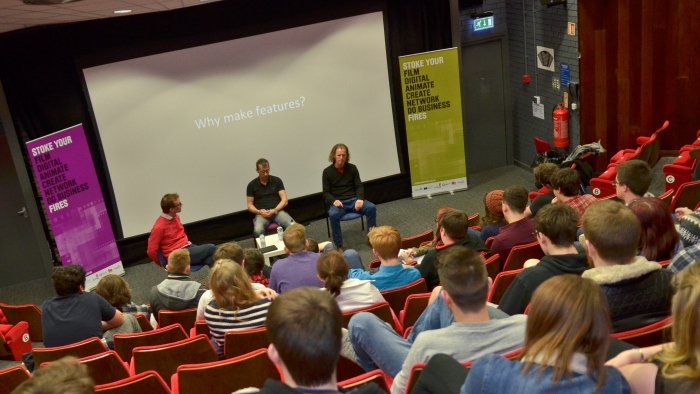
First, what happens to the physical space? We are already being prepared to lose the traditional lecture with lots of students sitting in close proximity for at least an hour. Personally, I think this is excellent and I won’t really miss them. Attendance has been poor at lectures for a long time, exposed to the vagaries of what timetable slot or room you are given, and there is little likelihood that the information contained within them is being retained in great detail anyway. For a long time they have felt like a performative experience that are giving students the ‘value’ that they are ‘paying for’. I won’t go into the toxic relationship to fees here, but we will have to explore it later in the post because it will have an effect on the reception of whatever the new normal is.
So lectures are out. Seminars may stay. These are smaller groups where we traditionally have more discursive experiences. My prediction is that many teachers will try shoe-horning lecture material into seminar spaces and repeat themselves multiple times a week, and the discursive nature will be reduced as a result. This would be a shame. Again, these sessions have had attendance issues because of timetable/room quality etc. but also because of a lack of necessity. Like lectures, these sessions are being missed by a section of students because they don’t see the point in them. Some are not learning in these sessions, because the sessions seem so diffuse. Discussion is great for dealing with complexity and nuance, but seminars only really work if the understanding has been developed previously to a level where meaningful debate or conversation happens. If some don’t attend, the whole purpose is defeated, and others soon follow suit. Strangely enough, the threat of reducing these lectures and seminars is meeting resistance from other students who are currently asking ‘what are we paying for?’ Even within the attendees many were there for the social act of meeting up with friends and not necessarily learning. Obviously not all students respond the same way to the same approaches. Balancing these perspectives and approaches for the benefit of the majority is difficult, and arguably we should not be trying to create something for the average, but something for all students.
What should happen to the physical space then? In my opinion, the physical space should be used more like maker-spaces. Essentially they are places where the students can go and have all the resources that they need to study and socialise yet there be no formal distinctions of attendance hours or timetabling. These spaces should be 24 hour facilities, like digital gyms, and the staff expertise should be available on a rotating flexible basis for helping with student issues but also getting on with their own research alongside the students (i.e. a learning community). Students who want to attend more often than others can do so, if others prefer working more from home, then it is also fine.
What would happen to the curriculum? Personally, I think most of it would go into asynchronous online content that the students could work through at their own pace. I am against the idea that the synchronous lecture experience can be conducted online and I think it is a narrow way of imagining how learning works. I recognise that asynchronous learning requires a type of discipline that may not be developed as a result of school in the United Kingdom, but I believe it is part of our responsibility to develop such a skill. Why? Because this is what learning will be like for the rest of their lives, not schooling. The Youtube video that you need to fix something is a great example of asynchronous learning.
So, what does that digital space look like? Again, I think a lot of educators will just record lectures and throw them online, which is understandable given time constraints, but a bit of a missed opportunity. I think most of online learning should be a mix of short video and lots of task based learning, hopefully with opportunities for there to be discussions online within the cohort. If I was king of the world, or a least an educator with some power to influence such things, I would strip back most of the learning towards a negotiated curriculum, that is not defined by year group or ability level, whereby the student could identify the things that they would like to learn specifically for themselves. I believe there would still need to be some core units that introduce new material that can continually influence and expand their learning and connect it to wider society, but I would put some of that specifically into other physical spaces (like community work for charities).
Will any of this happen? In all likelihood it is probably happening in some places already, but it seems a while off for most UK Higher Education institutions right now. The fees have made many make business decisions that are hard to deviate from (building physical spaces on the basis of recruitment projections for example.) Students are not demanding this change either, also because of the fees. The physical world of atoms seems to be more value than the dubious world of bits. However, I would like to see a movement towards a different emphasis on the fees situation. One where the fee is seen as enabling a period of access and opportunity to a space and open curriculum that you can explore to your hearts content, rather than the pre-determined course structure that basically extends the traditional schooling experience. I would go further and distinguish the specific break down of the fees, so that people could identify what part of the cost goes to the admin, staff costs, online maintenance and accreditation and what goes onto the physical space. This could result in ‘bench fees’ that address the physical space. This way, people could complete courses remotely at a cheaper cost or take a slower pace and be charged accordingly. Again, I think the one size fits all approach is inappropriate in this day and age.
If we had some of this as a result of lockdown, I’d be happy. As it is, I will be making small steps in this direction by trying to develop more asynchronous content and then using face to face time to personalise the experience in ways that seminars and lectures have not previously enabled.